
Career Guide
Energy Infrastructure Operations Operator
The role of an energy infrastructure operations and maintenance operator involves the operation of electricity, gas and nuclear networks, as well as the dispatching and supervision of energy generation facilities.
The profession
What is an energy infrastructure operations technician?
His role
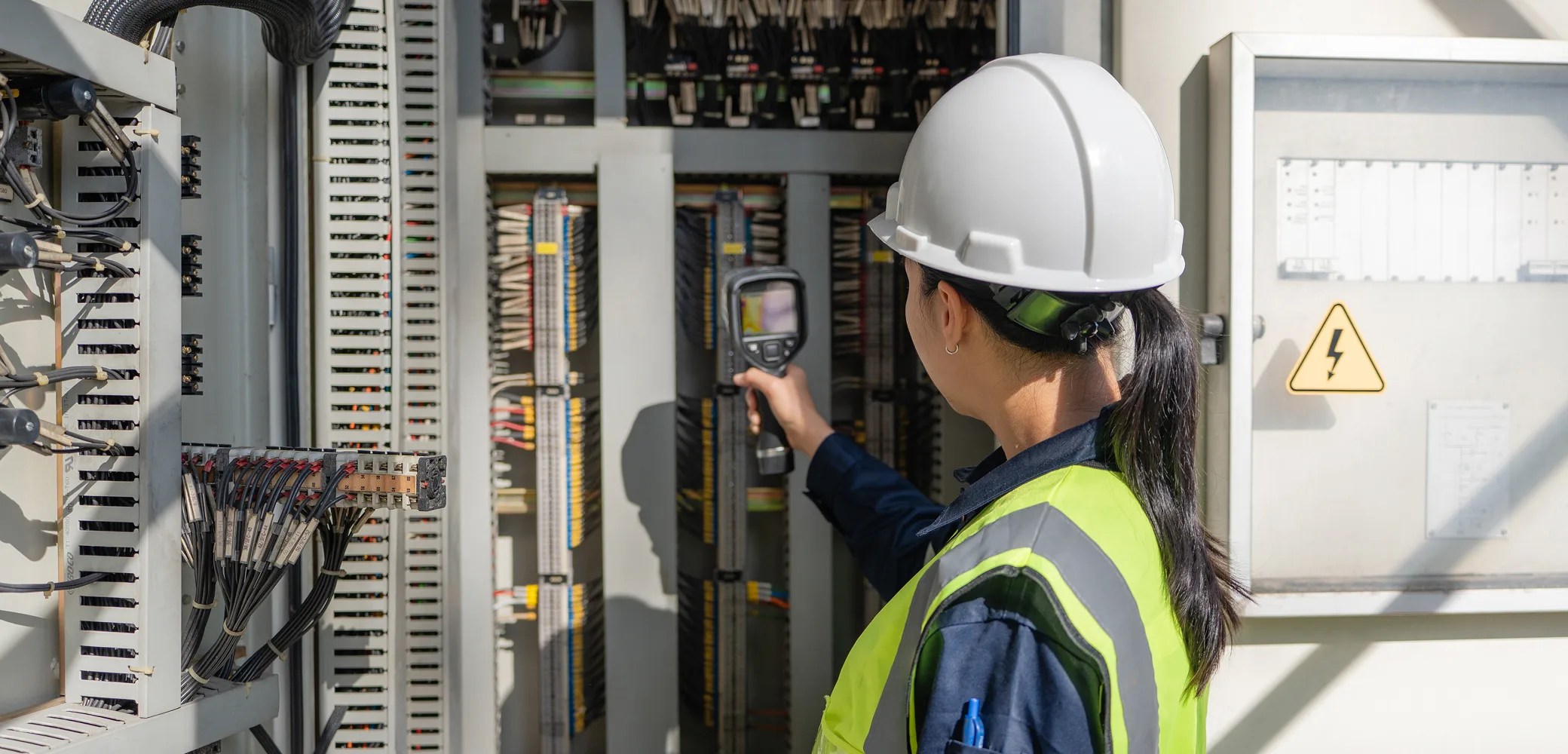
Energy infrastructure operations technicians manage and monitor energy generation facilities or transmission and distribution networks. They ensure compliance with safety regulations, commission equipment and intervene in the event of an incident to maintain the continuity of the public electricity or gas supply.
Its scope of activity
You will work for major public transport network operators or public distribution network operators, such as EDF, ENEDIS, RTE or GRDF. You may also work in power stations or dispatch centres responsible for managing electricity networks at regional or national level.
The functions
What are the duties of an energy infrastructure operations operator?
The tasks cover the monitoring, operation and maintenance of equipment relating to electricity distribution, electricity transmission and power generation.
Monitor plant parameters in real time using dispatch tools
Comply with the technical requirements imposed by the public network operator
Work with management teams and subcontractors on complex projects
Ensure that equipment is started up and shut down in accordance with current procedures
Draft operational reports and incident reports
Take part in on-call duties and ensure business continuity whilst working staggered shifts
Diagnose faults and coordinate maintenance work
Apply the safety rules specific to electricity networks and nuclear sites
Qualifications
Qualities and skills required to be a good energy infrastructure operations technician
This profession requires in-depth knowledge of electricity networks and energy generation systems, as well as the ability to react quickly under pressure. Strict adherence to procedures and compliance with safety regulations are non-negotiable, particularly in nuclear or high-voltage environments. The ECE offers courses in electrical engineering and energy systems that build on these technical foundations from the engineering degree programme onwards.
Proficiency in monitoring tools (SCADA, control and command systems) and the ability to read single-line diagrams are among the technical skills required. You must also understand the regulatory framework of the internal electricity market, the requirements of the CRE (Energy Regulatory Commission) and the obligations relating to the public electricity service. An understanding of the technical constraints specific to each sub-sector – the gas network or renewable energy – rounds off this foundation.
Beyond the technical aspects, this role requires strong interpersonal skills to coordinate shift teams and liaise with public network operators. The ability to work independently, adapt to shift work (3×8 or 5×8) and make quick decisions in emergency situations are key assets for progressing to roles such as shift supervisor or operations manager.
The benefits
What are the benefits of working as an energy infrastructure operations operator?
Operators covered by the National Statute for the Electricity and Gas Industries (IDCC 5001) benefit from specific pay scales, including an energy sector allowance, a 13th month’s salary and supplementary pension schemes. On-call and continuous service allowances account for between 15 and 30 per cent of the total remuneration package in the nuclear sector.
Opportunities for progression to roles such as shift supervisor, operations manager or senior engineer become available after a few years’ experience. The energy sector regularly recruits technicians and engineers, particularly to support the transition to renewable energy.
Remuneration
Energy Infrastructure Operations Operator: salary and career progression
At the start of your career (0–2 years), salaries range from €25,000 to €32,000 gross per annum (approximately €1,625 to €2,080 net per month), depending on the sub-sector – electricity, gas or renewable energy. After 5 to 7 years’ experience, the median salary rises to between €35,000 and €50,000 gross per annum within major groups such as EDF, ENEDIS or RTE. Senior professionals (with 10 years’ experience or more), particularly in the nuclear sector or grid dispatching, can earn up to €90,000 gross per annum as part of a comprehensive remuneration package, including shift and on-call allowances. In the Île-de-France region, a technician earns an average of €37,500 per year, which is approximately 10–20 per cent above the national average (source: Hellowork 2024).
Up to
€90,000
Annual salary
Training courses
What qualifications do you need to become an energy infrastructure operations technician ?
Our training courses
To pursue a career as an operations engineer or site manager, a degree in electrical engineering or energy systems is recommended. The ECE offers an engineering degree programme with specialisations in energy and electrical systems, available as a full-time or work-study programme.
You can choose between:

Everything you need to know about
Our guides
Take a look at our guides for everything you need to know about education, work-study schemes and careers.