


Specialization
Energy Transition Engineering Cycle
The energy challenge is here. The Energy Transition Engineering Cycle at ECE gives you the keys to act. You design the energy systems of tomorrow and actively participate in the decarbonization of the economy.
- Obtain an engineering degree from ECE recognized by the Commission des Titres d’Ingénieur.
- Master renewable energies, storage, and smart cities.
- Utilize AI for the optimization of energy systems.

jobs in the energy transition in France
increase in the number of jobs in the sector over two years
billion euros, revenue of the energy transition sector in France in 2022, which is 3.6 times the level of 2006
gross/year, salary proposed in 80% of job offers for an energy efficiency engineer, average €41,000
At the heart of the energy revolution
What is the Energy Transition Engineer sector ?
Understanding the Complex Dynamics of Energy
The energy transition is one of the greatest challenges of our time. It requires a profound transformation of our methods of energy production, transportation, storage, and consumption. To address this, engineers must master both the technical, economic, and regulatory aspects of the sector.
The Energy Transition Engineer Cycle at ECE trains you to understand all of these dynamics. You will study thermal machines, fluid mechanics, electrical engineering, and power electronics, as well as fossil fuels and energy markets. This foundational knowledge provides you with the essential global perspective to design solutions tailored to decarbonization challenges.
- Master thermal machines and fluid mechanics.
- Understand energy markets and their economic dynamics.
- Analyze the technical and regulatory issues of the energy sector.
Deploy clean energy solutions
Renewable energies are at the heart of the energy transition. You learn to size and optimize photovoltaic, wind, geothermal, and renewable heat systems. Energy storage is tackled in all its complexity: batteries, hydrogen, thermal storage, smart grids.
These skills are directly sought after by industry players. In France, the renewable energy market grew by 46% between 2020 and 2022, reaching 49.5 billion euros
- Size photovoltaic and wind renewable energy systems.
- Design energy storage solutions tailored to industrial needs.
- Analyze the physics and sizing of energy systems.
Optimizing energy at the scale of cities and territories
The energy transition is not just happening in power plants. It is also being built in cities, buildings, and distribution networks. You learn to design thermal solutions for buildings, optimize energy consumption in housing, and deploy smart city architectures.
These teachings prepare you to intervene in projects related to energy renovation, smart cities, and decarbonization of territories, sectors that are rapidly expanding driven by European regulations and the carbon neutrality goals for 2050.
- Design thermal solutions for buildings and energy renovation.
- Deploy smart city architectures and intelligent energy networks.
- Optimize energy consumption at the scale of territories.
Mobilizing digital technology for the transition
The Energy Transition Engineering Cycle at ECE includes a dedicated module on AI applied to energy systems. You will learn to use digital tools to optimize the production, distribution, and consumption of energy, to model systems using stochastic simulation, and to analyze data from smart grids.
The decarbonization of industry is also the subject of a dedicated course. You will develop the ability to design strategies to reduce CO₂ emissions in complex industrial environments, a highly sought-after skill by large companies committed to their environmental transformation.
- Apply AI to optimize energy systems.
- Design industrial decarbonization strategies.
- Use mathematical and statistical methods for energy simulation.
Our Training Programs
The Energy Transition Engineering Cycle at ECE
Campus
-
- 4- Year Degree
Engineering Cycle – Major in Energy Transition
Testimonial
Our students are satisfied
-

The ECE gave me a strong project-based mindset and a real window into the professional world. This versatility allowed me to gain experience in several sectors and then confidently launch my own ventures in IT, consulting, and recruitment.
 Alexandre MikolFounder & Managing Partner
Careers
The career opportunities of an Energy Transition Engineering Cycle
You graduate from the major with an engineer profile from ECE recognized by key players in the energy sector. EDF, TotalEnergies, ENEDIS: employers are diverse and responsibilities significant from the first years.
Study in the heart of a major city in France
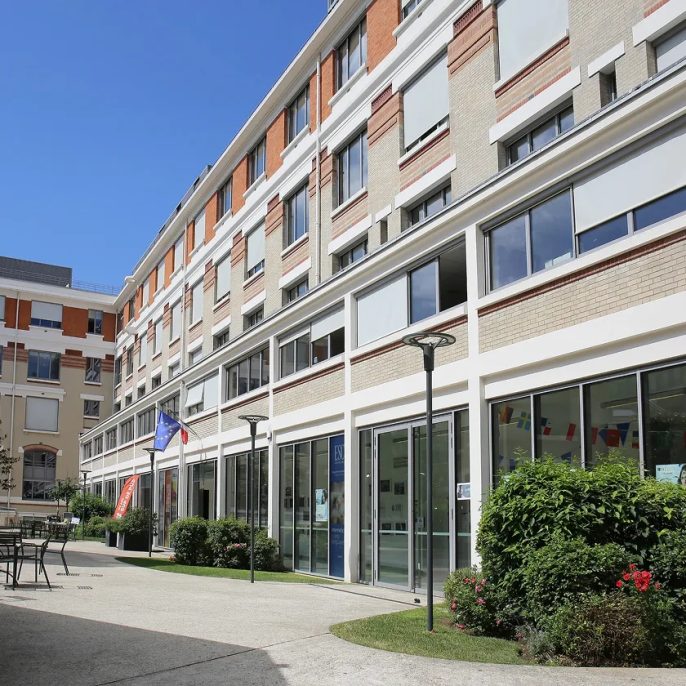
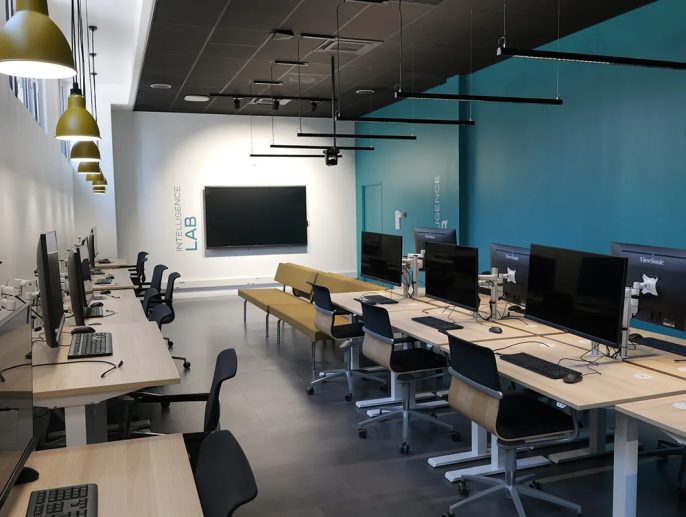
Campus of Paris
Study in the heart of the capital
Discover our engineering school in Paris: a campus in the heart of the capital, training in AI and Data for a unique student life.

The most comprehensive training offer from Bac to Bac+3
Our Engineer Cycle Specializations

Engineer Cycle AI & DATA
The Major in AI & Data of the ECE Engineer Cycle prepares you to harness the power of data and artificial intelligence to transform organizations and design the systems of tomorrow.
1 program

Engineering Cycle Cybersecurity
The Cybersecurity Major of the ECE Engineering Cycle prepares you to protect companies’ information systems against increasingly sophisticated cyber threats.
1 program

Engineering Cycle Digital
The Digital Engineering Cycle of ECE encompasses four majors at the heart of the technologies transforming the world. One diploma, four paths to excellence.
1 program

Finance Engineering Cycle
The Finance majors of the Engineering Cycle at ECE train engineers capable of modeling risks, managing complex financial operations, and anticipating transformations in the sector.
3 programs

Engineering Cycle Industry & Engineering
Two majors, a common ambition: to train engineers at ECE capable of designing, managing, and industrializing the digital systems and products that will transform the industry of tomorrow.
2 programs

Engineering Cycle Innovation & Management
The Engineering Cycle Innovation & Management at ECE prepares you to design and manage the digital transformation of industrial companies in the era of Industry 4.0 and 5.0
1 program
Health & Technologies Engineering Cycle
The Health & Technologies Engineering Cycle at ECE prepares you to design technological solutions that transform patient care and improve the quality of healthcare.
1 program
Meet us
Our events
Campus
-
14/10
Soirée Portes Ouvertes – ECE – Rennes – mercredi 14 octobre 2026
-
14/10
Soirée Portes Ouvertes – ECE – Bordeaux – 14/10/2026
-
17/10
Portes Ouvertes
FAQ
Questions?
Are you considering the Energy Transition Engineering Program? All the answers to the most frequently asked questions are gathered here. Our team is available to discuss this with you.
Discover our Energy Transition programs
The energy transition is one of the most dynamic sectors of the French economy. In 2022, the turnover of sectors related to the energy transition reached €113 billion in France, with over 421,000 jobs mobilized, an increase of 24% in two years.
European regulations, the 2050 carbon neutrality goals, and the escalation of renewable energies create a structural demand for specialized engineers. Choosing this field means committing to a career with a significant impact, driven by planetary challenges and sustainable professional opportunities.
The Energy Transition Engineering Cycle at ECE is accessible in the 4th year of the engineering program, after validation of the core curriculum. The studies undertaken during the initial years of the engineering cycle lay the necessary scientific and technical foundations: mathematics, physics, electronics, and computer science.
Admissions for initial training are done through the Avenir competition. The school examines each application individually, considering the academic background and motivation for energy transition issues. A motivation interview complements the assessment before any admission decision is made.
A specialized energy transition engineer works across a wide range of missions, allowing actions at all levels of the energy system. They design and size renewable energy production installations, optimize the energy consumption of buildings and industries, and deploy storage solutions tailored to the needs of territories.
- Their mission also includes managing smart grids, conducting techno-economic analyses of energy projects, and overseeing the teams responsible for their implementation.
- In a constantly evolving regulatory environment, their ability to anticipate sector changes is a major asset for the companies that hire them.
Project-based pedagogy is at the heart of the ECE Engineering Cycle. The work conducted throughout the training focuses on real issues in the energy sector. You size photovoltaic installations, model storage systems, simulate smart city networks, and analyze the energy performance of buildings under real conditions.
These practical learnings rely on digital simulation tools and advanced mathematical methods, enabling the acquisition of expertise that is directly applicable in the workplace. Projects often take place in multidisciplinary teams, under conditions similar to those encountered in the field.
Graduates of the Energy Transition Engineering Cycle work in a wide variety of organizations:
- large energy companies ;
- design offices ;
- local authorities ;
- environmental consulting firms ;
- cleantech startups.
The roles held by ECE alumni illustrate this diversity: Short Term Power Optimizer at EDF, Energy Market Risk Analyst at TotalEnergies, Energy Manager at L’Oréal.
With rapidly evolving sector technologies, graduates possess a strong adaptability. Their combined skills in energy systems engineering and project management position them for responsible roles from the early years of their careers.
Artificial intelligence plays an increasingly significant role in energy engineering. The program includes a module dedicated to AI and energy, allowing you to master tools for optimizing production, distribution, and consumption systems.
You learn to leverage data from smart grids to improve facility performance and reduce energy losses.
This digital dimension is a strong differentiator in the job market. Engineers who can combine expertise in energy systems engineering with mastery of data and AI technologies are among the most sought-after profiles by players in the energy transition in France and internationally.
Yes. The teachings of the Energy Transition Major are delivered in French and English, directly preparing students to thrive in international professional environments. Energy issues are global: the technologies and regulations you master apply everywhere in the world.
The school relies on a network of 142 partner universities across 4 continents and offers 40 international dual degrees. These opportunities enrich your studies abroad and develop a global perspective on the challenges of energy transition, a valuable asset for accessing major companies in the industry on an international scale.
Students who thrive in this program have a strong interest in physical sciences, modeling, and environmental issues. Aptitude for managing complex systems, curiosity about new energy technologies, and a desire to contribute to a decarbonized future are essential drivers of success.
The field of energy transition lies at the intersection of engineering, economics, and environmental sciences. The profiles capable of navigating between these disciplines, communicating with multidisciplinary teams, and making decisions in uncertain environments are precisely those that companies are looking for.
No. The Energy Transition Major is offered only full-time on the Paris campus. This format allows for complete immersion in the courses and projects, enabling students to fully benefit from the richness of the program.
Long-term internships are integrated into the curriculum, providing solid professional experience in companies. These periods in a professional setting constitute essential hands-on learning, allowing students to apply the skills acquired in training in real industrial contexts.
The network of 10,000 partner companies of ECE facilitates access to high-stakes missions in the energy sector.
The engineering degree from ECE recognized by the CTI is a Bac +5 level qualification that opens several pathways. You can directly enter the job market, where graduates of the Energy Transition Engineering Cycle are highly sought after, or pursue a doctorate or a specialized research program in energy technologies.
ECE also offers the MSc Sustainable Energy Futures, a Bac +5 level program entirely taught in English, allowing you to deepen your understanding of the energy transition issues from an international perspective.
This dual competence in engineering and energy transition management opens doors to leadership positions in public and private organizations engaged in decarbonization.