


Radiance of Research
Discover research during your studies
Relations with Training
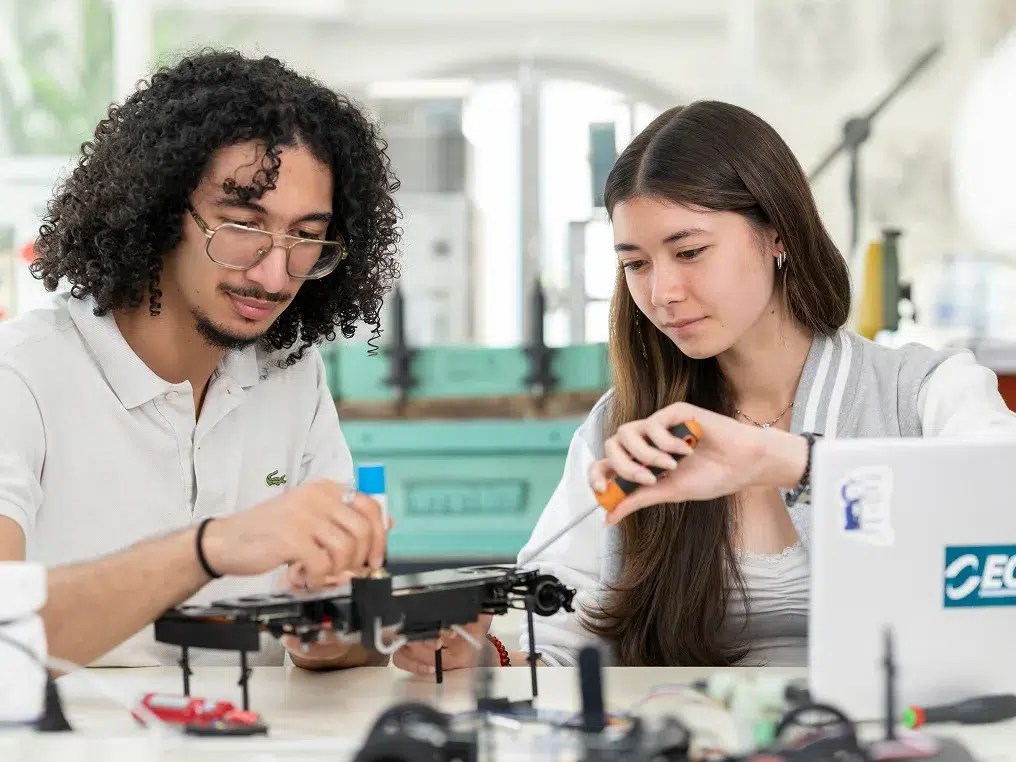
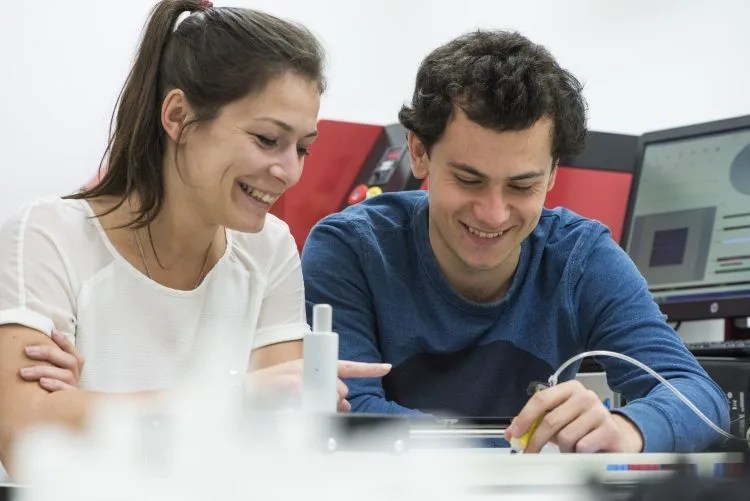
As part of research-based training, LyRIDS emphasizes the dissemination of scientific culture to engineering students through two courses offered during their training (ING4 and ING5):
- Research & Development.
- Introduction to Research & Innovation.
Engineering students participate in laboratory visits and workshops led by teacher-researchers from LyRIDS and numerous partner researchers during years 4 and 5.
These visits are complemented by support on research projects in which they get introduced to the profession of research and the scientific approach.
This training enriches pedagogy, enhances the attractiveness of research within an engineering school (more than 50 students/year), and the continuation of studies in research internships and doctoral theses (50% of defended and ongoing theses are former students of ECE).
The doctoral training has been particularly strengthened since 2017. Since that date, LyRIDS has recorded 22 defended theses, including 11 graduates with engineering degrees from ECE, and 10 ongoing theses including 2 graduates with engineering degrees from ECE.
A recent survey on the outcomes of former doctoral students from LyRIDS indicates that 52.6 % of them hold positions in academia and about 45 % are employed in industry.
It is currently difficult to quantify the continuation of studies in other research organizations, but it is clear that the process established within the framework of research training is attractive and motivates engineering graduates to pursue a doctoral training and, for some, to continue towards a PhD.

Work with the best partners
Academic and Industrial Relations
This structuring around an interdisciplinary program has allowed for the creation of numerous scientific collaborations with national and industrial research organizations. The framework and specific agreements signed with research organizations enable the ECE research center to:
- Enroll doctoral candidates in doctoral schools.
- Co-supervise doctoral candidates with thesis directors affiliated with the organizations.
- To carry out joint publications.
- To have access to specific high-tech scientific equipment.
- To sign secondments of EC in research organizations and competitiveness clusters such as the VEDECOM institute (of which ECE is a member).
- To propose CIFRE theses with industrial partners and academic organizations.
A scientific network present throughout France
LyRIDS has a strong connection to the academic and industrial world.
Île-de-France
University Paris-Saclay
- Laboratory of Systems Engineering of Versailles
- Data and Algorithms for a Smart and Sustainable City (DAVID)
- Centrale Supelec
- Leon Brillouin Laboratory (LLB, UMR CEA-CNRS)
ALTEN (Lincoln)
- The Institute of NanoSciences of Paris (INSP, UMR-CNRS)
- Institute of Intelligent Systems and Robotics (ISIR, UMR-CNRS)
Telecom Sud Paris: Distributed services, Architectures, Modeling, Validation, Network Administration (S@MOVAR)
CNAM de Paris : Centre for Studies and Research in Computing and Communications (Cédric)
The Armed Forces Biomedical Research Institute (IRBA)
KNDS
ALTEN (Lincoln)
The LyRIDS develops and will develop its activities at each of the current ECE sites: Paris, Lyon, Bordeaux, and future ones: Rennes, Marseille, Toulouse
Rhône-Alpes
- Centrale Lyon – Tribology and Dynamic Systems Laboratory (LTDS)
- Claude Bernard University Lyon 1 – Computer Science Laboratory in Image and Information Systems (LIRIS, UMR)
Occitanie
- Toulouse 3 University – Paul Sabatier: Research Institute in Computer Science of Toulouse (IRIT, UMR)
Provence-Alpes-Côte d’Azur
Aix Marseille University
- Computer Science and Systems Laboratory (LIS, UMR-CNRS)
- Mathematics Institute of Marseille (I2M, UMR-CNRS)
Nouvelle-Aquitaine
- University of Poitiers: Computer and Automatic Laboratory for Systems (LIAS)
- University of Bordeaux – Bordeaux Research Laboratory in Computer Science (LaBRI, UMR-CNRS)
Normandy
- Caen Normandy University – Nicolas Oresme Mathematics Laboratory (LMNO, UMR)
These numerous agreements allow the creation of close ties with associated universities and laboratories where teacher-researchers are involved in common research themes. They also enable the LyRIDS to ensure that doctoral students are registered and supervised in doctoral schools, co-supervise doctoral students with research organizations, and produce joint publications.
International Relations
Teacher-researchers actively participate in promoting research internationally in various forms.
Presentation of communications published in conference proceedings with a review committee.
Participation in the program committee, reading committee, and organization of international conferences.
Supervision of international students within the framework of the ERASMUS program and research internships. The research center has welcomed around ten students since 2017.
Inviting world-renowned researchers to present papers.
Participation in the outgoing mobility program to undertake teaching and research stays in a foreign organization.

Our partners
These numerous agreements allow for strong ties to be created with associated universities and laboratories where teacher-researchers are involved in common research topics. They also enable LyRIDS to ensure doctoral students are registered and supported in doctoral schools, co-supervise doctoral students with research organizations, and carry out joint publications.
The companies of our students



LyRIDS is also expanding its activities internationally. Its partners are :
- The LAIS (Laboratory of Technological Innovation in Health) at the Federal University of Rio Grande do Norte (UFRN)
- École de Technologie Supérieure (ÉTS) – Montreal, Canada
- University of Ruse – Bulgaria
- Hankuk University of Foreign Studies – South Korea
- NORCE Norwegian Research – Norway