
Career guide
Bioprocessing / Bioproduction Engineer
The job of a bioprocessing engineer, also known as a bioproduction engineer, involves designing and managing the manufacturing processes of biological products at an industrial scale.
The profession
What is a bioprocessing / bioproduction engineer?
Their role
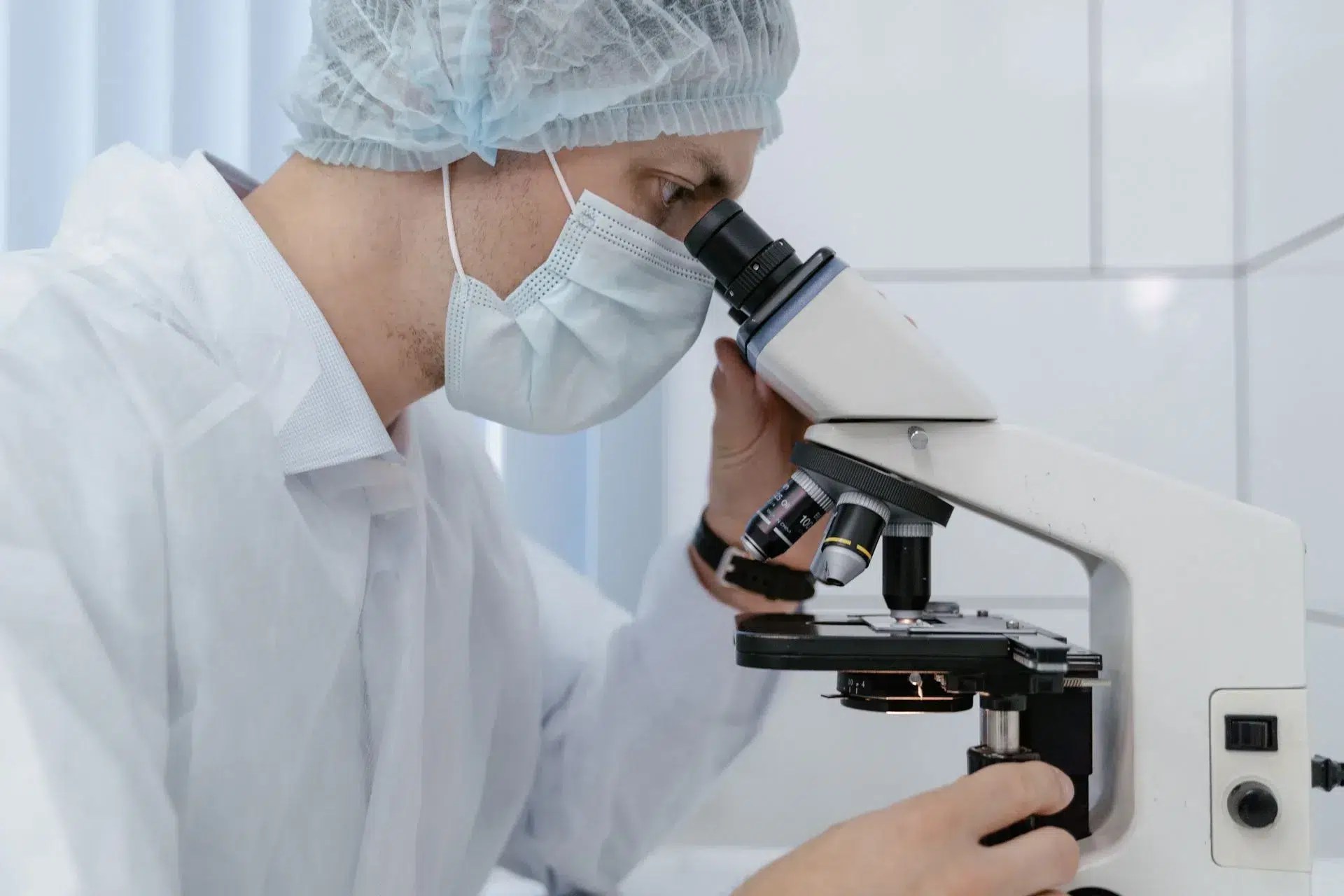
The bioprocessing engineer designs and optimizes the manufacturing processes of biopharmaceuticals in the laboratory and production units. You manage cell culture and fermentation steps, then ensure the purification of the final product. This role combines scientific expertise and coordination of technical teams in a field where rigor conditions the safety of biological products delivered to patients.
Their scope of action
As a bioprocessing engineer, you primarily work in the pharmaceutical industry, in contact with production and quality assurance teams. You also intervene in industrial biotechnology for the manufacture of products derived from biological processes. Your activity is organized between the laboratory and the production unit, where you supervise bioreactors.
The functions
What are the missions of a bioprocessing / bioproduction engineer?
The missions of the bioprocessing engineer cover the design and management of biological production processes, from the laboratory to the industrial site.
Participate in the development of fermentation and purification processes
Implement quality controls in accordance with good manufacturing practices (GMP)
Write technical and regulatory documentation
Manage scale-up trials from the laboratory to the industrial site
Coordinate technical teams on the production site
Supervise bioreactors and bioproduction equipment
Optimizing production yields from data analysis
Ensuring the transfer of processes between manufacturing sites
Qualifications
Qualities and skills necessary to be a good bioprocess/bioproduction engineer
The profession of bioprocess engineer relies on scientific expertise in biochemistry and microbiology applied to biological processes. You must also master the thermodynamics of bioproduction equipment to anticipate yield variations.
Adhering to good manufacturing practices ensures that biological processes comply with the requirements of the pharmaceutical industry. Quality assurance is a central focus of the profession, associated with mastery of the industrial process modeling tools.
Interpersonal skills are as important as technical expertise: you manage multidisciplinary teams and communicate scientific information to various stakeholders. An engineering degree specialized in biotechnology prepares you for all of these responsibilities.
Benefits
What are the advantages of the bioprocess/bioproduction engineering profession?
Positions for bioprocess engineers often come with profit-sharing bonuses and RTT (reduction of working time). Managers also benefit from a favorable health insurance plan, and sometimes a company vehicle for supervisory roles.
Career advancements lead to positions as production manager or bio-industrial director. Île-de-France houses nearly half of the French biotechnology companies.
Compensation
Bioprocess/bioproduction engineer: salary and career progression
At the beginning of your career, you can expect a salary between €32,000 and €42,000 gross per year, which is about €2,700 to €3,500 gross monthly. ONISEP even places the entry at €3,416 gross monthly for a production engineer position in biotechnology. After five to ten years of experience, the salary evolves to between €45,000 and €55,000 gross annually, then reaches €65,000 to €75,000 gross per year at the senior level, and even more in large pharmaceutical companies. Studyrama mentions a wider range for a junior profile in general biotechnology, while APEC confirms, through its job offers, salaries between €40,000 and €60,000 gross annually.
Up to
€75,000
Salary per year
The training programs
What studies to become a bioprocessing / bioproduction engineer?
Our training programs
The engineering diploma specialized in biotechnology or process engineering is the most common way to access this profession, available after a preparatory class or through parallel admission.
The biotechnology program at ECE is offered in alternation, allowing you to gain corporate experience from the start of the training.
Everything about
Our guides
Consult our guides to get all the keys on education, alternation, and professions.